Recombinant Human KH domain-containing, RNA-binding, signal transduction-associated protein 2 (KHDRBS2)
-
中文名稱:人KHDRBS2重組蛋白
-
貨號:CSB-YP730139HU
-
規格:
-
來源:Yeast
-
其他:
-
中文名稱:人KHDRBS2重組蛋白
-
貨號:CSB-EP730139HU
-
規格:
-
來源:E.coli
-
其他:
-
中文名稱:人KHDRBS2重組蛋白
-
貨號:CSB-EP730139HU-B
-
規格:
-
來源:E.coli
-
共軛:Avi-tag Biotinylated
E. coli biotin ligase (BirA) is highly specific in covalently attaching biotin to the 15 amino acid AviTag peptide. This recombinant protein was biotinylated in vivo by AviTag-BirA technology, which method is BriA catalyzes amide linkage between the biotin and the specific lysine of the AviTag.
-
其他:
-
中文名稱:人KHDRBS2重組蛋白
-
貨號:CSB-BP730139HU
-
規格:
-
來源:Baculovirus
-
其他:
-
中文名稱:人KHDRBS2重組蛋白
-
貨號:CSB-MP730139HU
-
規格:
-
來源:Mammalian cell
-
其他:
產品詳情
-
純度:>85% (SDS-PAGE)
-
基因名:KHDRBS2
-
Uniprot No.:
-
別名:KH domain containing; RNA binding; signal transduction associated protein 2; 6330586C16Rik; bA535F17.1; FLJ38664; hSLM 1; hSLM-1; KH domain containing; RNA binding; signal transduction associated 2; KH domain-containing; KHDR2_HUMAN; khdrbs2; MGC26664; RNA-binding; Sam68 like mammalian protein 1; Sam68-like mammalian protein 1; signal transduction-associated protein 2; SLM 1; SLM-1; SLM1
-
種屬:Homo sapiens (Human)
-
蛋白長度:full length protein
-
表達區域:1-349
-
氨基酸序列MEEEKYLPEL MAEKDSLDPS FVHASRLLAE EIEKFQGSDG KKEDEEKKYL DVISNKNIKL SERVLIPVKQ YPKFNFVGKL LGPRGNSLKR LQEETGAKMS ILGKGSMRDK AKEEELRKSG EAKYAHLSDE LHVLIEVFAP PGEAYSRMSH ALEEIKKFLV PDYNDEIRQE QLRELSYLNG SEDSGRGRGI RGRGIRIAPT APSRGRGGAI PPPPPPGRGV LTPRGSTVTR GALPVPPVAR GVPTPRARGA PTVPGYRAPP PPAHEAYEEY GYDDGYGGEY DDQTYETYDN SYATQTQSVP EYYDYGHGVS EDAYDSYAPE EWATTRSSLK APPQRSARGG YREHPYGRY
-
蛋白標簽:Tag?type?will?be?determined?during?the?manufacturing?process.
The tag type will be determined during production process. If you have specified tag type, please tell us and we will develop the specified tag preferentially. -
產品提供形式:Lyophilized powder
Note: We will preferentially ship the format that we have in stock, however, if you have any special requirement for the format, please remark your requirement when placing the order, we will prepare according to your demand. -
復溶:We recommend that this vial be briefly centrifuged prior to opening to bring the contents to the bottom. Please reconstitute protein in deionized sterile water to a concentration of 0.1-1.0 mg/mL.We recommend to add 5-50% of glycerol (final concentration) and aliquot for long-term storage at -20℃/-80℃. Our default final concentration of glycerol is 50%. Customers could use it as reference.
-
儲存條件:Store at -20°C/-80°C upon receipt, aliquoting is necessary for mutiple use. Avoid repeated freeze-thaw cycles.
-
保質期:The shelf life is related to many factors, storage state, buffer ingredients, storage temperature and the stability of the protein itself.
Generally, the shelf life of liquid form is 6 months at -20°C/-80°C. The shelf life of lyophilized form is 12 months at -20°C/-80°C. -
貨期:Delivery time may differ from different purchasing way or location, please kindly consult your local distributors for specific delivery time.Note: All of our proteins are default shipped with normal blue ice packs, if you request to ship with dry ice, please communicate with us in advance and extra fees will be charged.
-
注意事項:Repeated freezing and thawing is not recommended. Store working aliquots at 4°C for up to one week.
-
Datasheet :Please contact us to get it.
產品評價

相關產品
靶點詳情
-
功能:RNA-binding protein that plays a role in the regulation of alternative splicing and influences mRNA splice site selection and exon inclusion. Binds both poly(A) and poly(U) homopolymers. Phosphorylation by PTK6 inhibits its RNA-binding ability. Induces an increased concentration-dependent incorporation of exon in CD44 pre-mRNA by direct binding to purine-rich exonic enhancer. Can regulate alternative splicing of NRXN1 in the laminin G-like domain 6 containing the evolutionary conserved neurexin alternative spliced segment 4 (AS4) involved in neurexin selective targeting to postsynaptic partners. Regulates cell-type specific alternative splicing of NRXN1 at AS4 and acts synergystically with SAM68 in exon skipping. In contrast acts antagonistically with SAM68 in NRXN3 exon skipping at AS4. Its phosphorylation by FYN inhibits its ability to regulate splice site selection. May function as an adapter protein for Src kinases during mitosis.
-
基因功能參考文獻:
- molecular cloning and characterization PMID: 12549823
-
亞細胞定位:Nucleus.
-
蛋白家族:KHDRBS family
-
組織特異性:Highly expressed in brain, lung, kidney and small intestine. Weakly expressed in placenta, liver, spleen, thymus, ovary and colon.
-
數據庫鏈接:
Most popular with customers
-
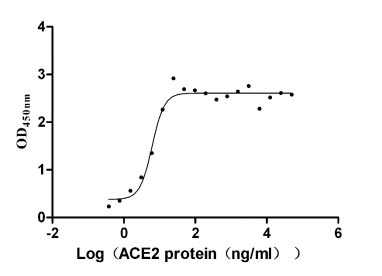
Recombinant Paguma larvata Angiotensin-converting enzyme 2 (ACE2), partial (Active)
Express system: Mammalian cell
Species: Paguma larvata (Masked palm civet)
-
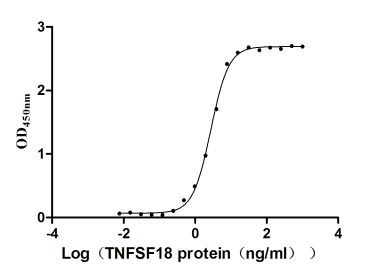
Recombinant Human Tumor necrosis factor ligand superfamily member 18 (TNFSF18), partial (Active)
Express system: Mammalian cell
Species: Homo sapiens (Human)
-
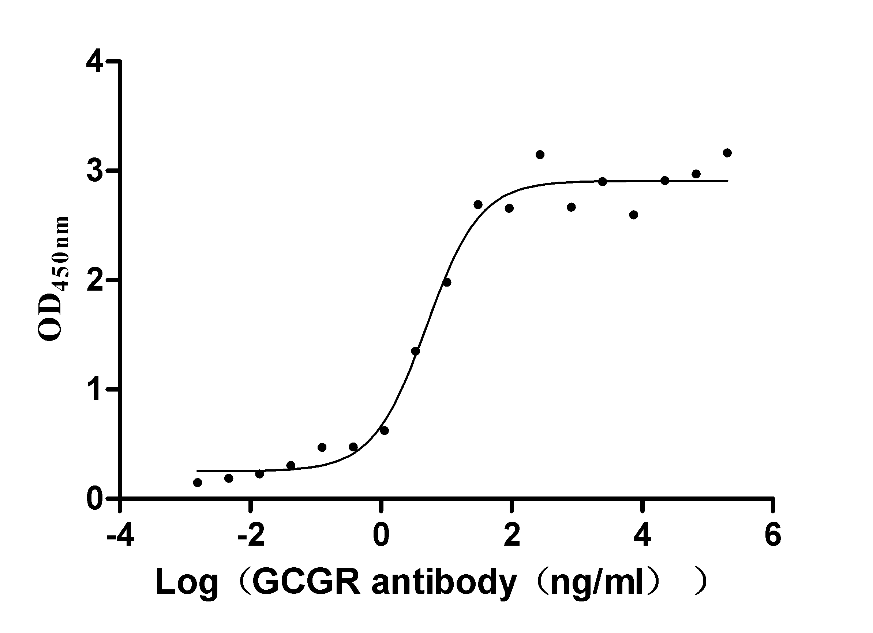
Recombinant Human Glucagon receptor (GCGR), partial (Active)
Express system: Mammalian cell
Species: Homo sapiens (Human)
-
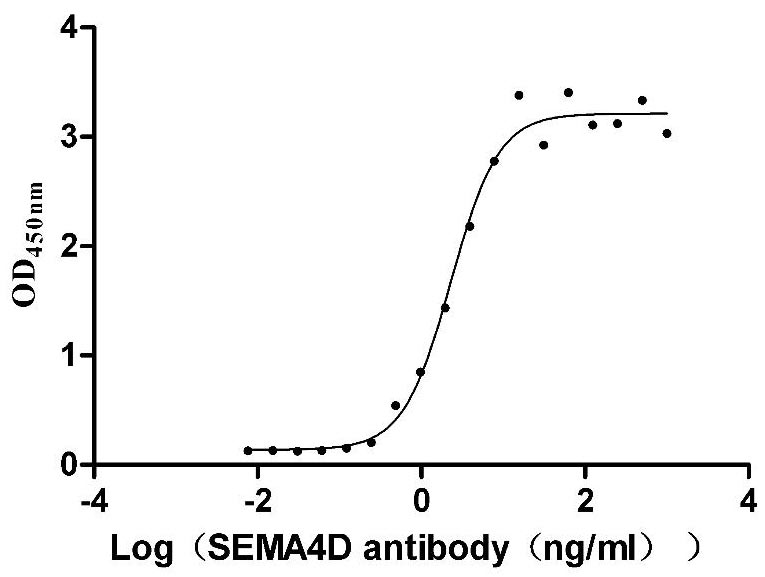
Recombinant Macaca mulatta Semaphorin-4D isoform 1 (SEMA4D), partial (Active)
Express system: Mammalian cell
Species: Macaca mulatta (Rhesus macaque)
-
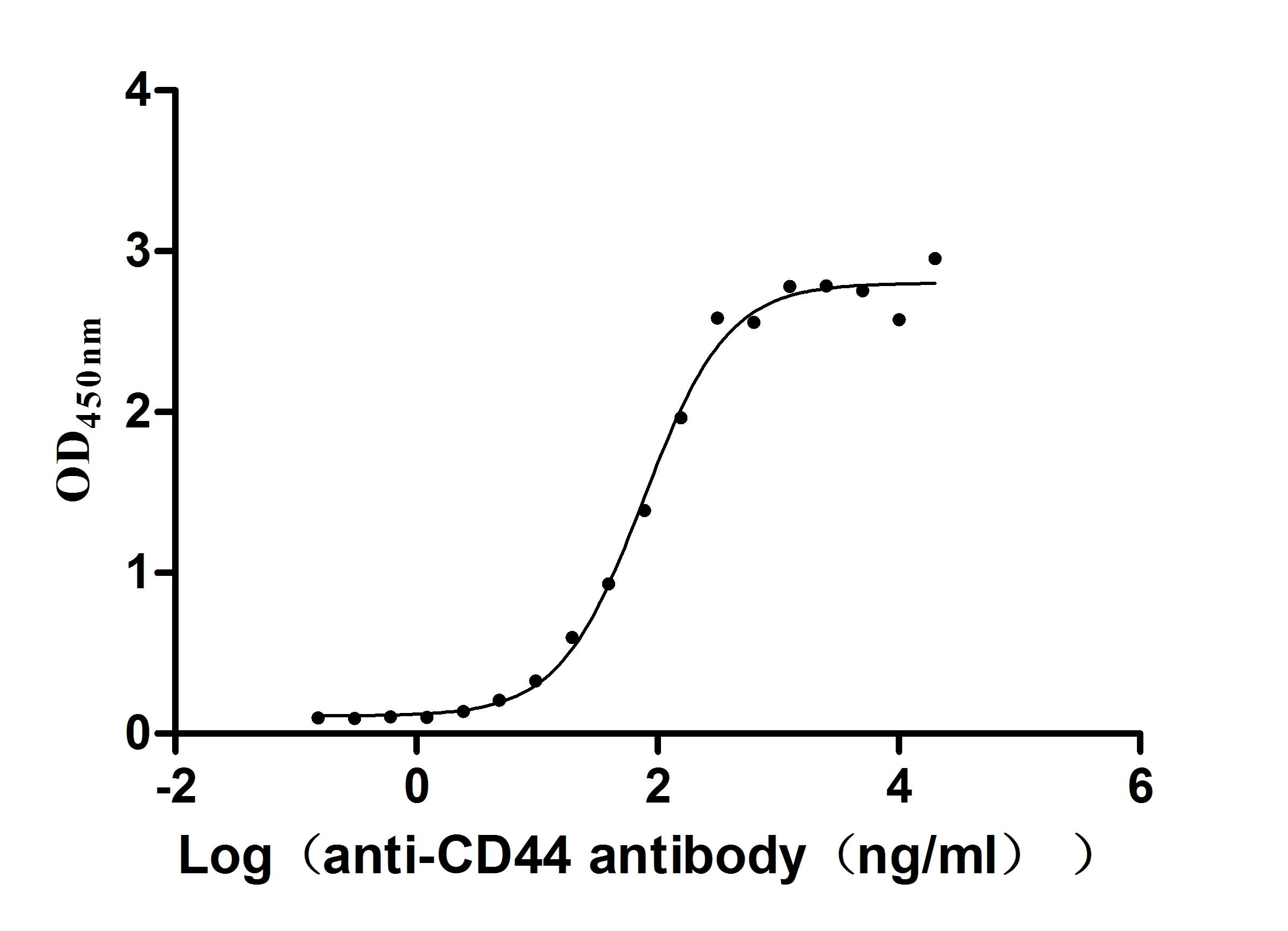
Recombinant Macaca fascicularis CD44 antigen (CD44), partial (Active)
Express system: Mammalian cell
Species: Macaca fascicularis (Crab-eating macaque) (Cynomolgus monkey)
-
-

Recombinant Macaca fascicularis Cadherin 6(CDH6),partial (Active)
Express system: Mammalian cell
Species: Macaca fascicularis (Crab-eating macaque) (Cynomolgus monkey)
-
Express system: Mammalian cell
Species: Homo sapiens (Human)