Recombinant Rat ATP-sensitive inward rectifier potassium channel 8 (Kcnj8), partial
-
中文名稱:大鼠Kcnj8重組蛋白
-
貨號:CSB-YP737214RA1
-
規格:
-
來源:Yeast
-
其他:
-
中文名稱:大鼠Kcnj8重組蛋白
-
貨號:CSB-EP737214RA1
-
規格:
-
來源:E.coli
-
其他:
-
中文名稱:大鼠Kcnj8重組蛋白
-
貨號:CSB-EP737214RA1-B
-
規格:
-
來源:E.coli
-
共軛:Avi-tag Biotinylated
E. coli biotin ligase (BirA) is highly specific in covalently attaching biotin to the 15 amino acid AviTag peptide. This recombinant protein was biotinylated in vivo by AviTag-BirA technology, which method is BriA catalyzes amide linkage between the biotin and the specific lysine of the AviTag.
-
其他:
-
中文名稱:大鼠Kcnj8重組蛋白
-
貨號:CSB-BP737214RA1
-
規格:
-
來源:Baculovirus
-
其他:
-
中文名稱:大鼠Kcnj8重組蛋白
-
貨號:CSB-MP737214RA1
-
規格:
-
來源:Mammalian cell
-
其他:
產品詳情
-
純度:>85% (SDS-PAGE)
-
基因名:
-
Uniprot No.:
-
別名:Kcnj8; ATP-sensitive inward rectifier potassium channel 8; Inward rectifier K(+ channel Kir6.1; Potassium channel, inwardly rectifying subfamily J member 8; uKATP-1
-
種屬:Rattus norvegicus (Rat)
-
蛋白長度:Partial
-
蛋白標簽:Tag?type?will?be?determined?during?the?manufacturing?process.
The tag type will be determined during production process. If you have specified tag type, please tell us and we will develop the specified tag preferentially. -
產品提供形式:Lyophilized powder
Note: We will preferentially ship the format that we have in stock, however, if you have any special requirement for the format, please remark your requirement when placing the order, we will prepare according to your demand. -
復溶:We recommend that this vial be briefly centrifuged prior to opening to bring the contents to the bottom. Please reconstitute protein in deionized sterile water to a concentration of 0.1-1.0 mg/mL.We recommend to add 5-50% of glycerol (final concentration) and aliquot for long-term storage at -20℃/-80℃. Our default final concentration of glycerol is 50%. Customers could use it as reference.
-
儲存條件:Store at -20°C/-80°C upon receipt, aliquoting is necessary for mutiple use. Avoid repeated freeze-thaw cycles.
-
保質期:The shelf life is related to many factors, storage state, buffer ingredients, storage temperature and the stability of the protein itself.
Generally, the shelf life of liquid form is 6 months at -20°C/-80°C. The shelf life of lyophilized form is 12 months at -20°C/-80°C. -
貨期:Delivery time may differ from different purchasing way or location, please kindly consult your local distributors for specific delivery time.Note: All of our proteins are default shipped with normal blue ice packs, if you request to ship with dry ice, please communicate with us in advance and extra fees will be charged.
-
注意事項:Repeated freezing and thawing is not recommended. Store working aliquots at 4°C for up to one week.
-
Datasheet :Please contact us to get it.
產品評價

相關產品
靶點詳情
-
功能:This potassium channel is controlled by G proteins. Inward rectifier potassium channels are characterized by a greater tendency to allow potassium to flow into the cell rather than out of it. Their voltage dependence is regulated by the concentration of extracellular potassium; as external potassium is raised, the voltage range of the channel opening shifts to more positive voltages. The inward rectification is mainly due to the blockage of outward current by internal magnesium. Can be blocked by external barium.
-
基因功能參考文獻:
- it can be concluded that mitoKATP channels regulate mitochondrial dynamics to participate in rotenone-induced Parkinson's disease mainly attributes to the pore subunits of Kir6.1. PMID: 29353068
- In vascular smooth muscle KATP channel subunits Kir6.1 and SUR2B contribute to modify the functionality of this channel in hypertension with age. PMID: 27035370
- both Kir6.1(V65M) and Kir6.2(V64M) mutations essentially abolish high-affinity sensitivity to the KATP blocker glibenclamide in both intact cells and excised patches. This raises the possibility that, at least for some CS mutations, sulfonylurea therapy may not prove to be successful and highlights the need for detailed pharmacogenomic analyses of CS mutations. PMID: 28842488
- Our results suggest that pretreatment with 0.5 MAC sevoflurane is as effective as IPC against intestinal ischemia-reperfusion injury. The activation of PKC and mKATP may be involved in the protective mechanisms of SPC. PMID: 26505750
- Suggest that the increase in KATP channel subunits, SUR2 and Kir6.1, in the rostral ventrolateral medulla may be responsible for the greater sympathetic outflow and pressor effect of hydroxylamine in Ad-cystathionine beta-synthetase injected rats. PMID: 25599573
- ATP-sensitive potassium currents from channels formed by Kir6 and a modified cardiac mitochondrial SUR2 variant PMID: 24037327
- Kir6.1 overactivity in vascular muscle can lead directly to reduced vascular contractility and lower blood pressure. PMID: 23974906
- Data indicate that activation of mitoK(ATP) channel decreased the latency time of the transjunctional currents by 50%. PMID: 23418587
- Tempol attenuates the exercise pressor reflex in rats with ligated femoral arteries via effects on K(ATP) channels. PMID: 22636679
- Ischemia-reperfusion injury in the rat testis significantly increased the expressions of Kir6.1 protein and mRNA as well as Kir6.2 mRNA. PMID: 22480512
- K(ATP) channel subunits Kir6.1, Kir6.2, SUR1 and SUR2B were identified in the trigeminal ganglia and trigeminal nucleus caudalis. PMID: 22144717
- Vascular KATP channels (Kir6.1/SUR2B) are inhibited by oxidative stress. This paper found the inhibition is through a covalent modification of the channel protein, i.e., S-glutathionylation of a cysteine residue (Cys-176) on the Kir6.1 subunit. PMID: 21216949
- Guanxinkang injection significantly increased mRNA and protein expressions of Kir6.1, Kir6.2, SUR2A and SUR2B in ischemic myocytes but with no significant difference compared to pinacidil. PMID: 20456845
- Data identified glycolytic enzymes GAPDH and aldolase A as putative interacting proteins for cardiac ATP-sensitive potassium (K(ATP)) channels. PMID: 21482559
- Interaction of caveolin-1 functionally regulates the activity of the vascular subtype of potassium KATP channel Kir6.1. PMID: 20624795
- Lipopolysaccharides up-regulate Kir6.1/SUR2B channel expression and enhance vascular KATP channel activity via NF-kappaB-dependent signaling PMID: 19959479
- Data suggest that sarc and mitoKATP channel populations play distinct protective roles, triggered by PKC and/or adenosine, during chemically induced hypoxia/reoxygenation. PMID: 11726534
- there are at least two putative mesangial KATP that most likely represent hetero-octamers, comprised of either rSUR2B or mcSUR2 in complex with Kir6.1. PMID: 11967023
- Results report the expression of four K(ATP) subunits in vascular tissues, unmasking the diversity of native K(ATP) channels in vascular SMCs. PMID: 12163042
- Kir 6.1 gene expression is induced by urocortin in cardiac myocytes PMID: 12234964
- Kir6.1 channel subunits are highly expressed during early development of ureteric bud and nephron epithelia where Kir6.1 activity regulates cell proliferation. PMID: 12466933
- Intracellular acidification may produce dilatation of the basilar artery through activation of ATP-sensitive potassium channels in vivo. Kir6.1/SUR2B may be the major potassium channels that mediate propionate-induced dilatation of the artery. PMID: 12677015
- Kir6.1 protein is found in a small subset of neurons in distinct areas of the brain, like the hypothalamic supraoptic and paraventricular nuclei and the striatum. Kir6.1-positive neurons in the striatum could be characterized as cholinergic interneurones PMID: 12965237
- The expression of Kir6.1 and SUR2B mRNAs was observed in small and intermediate arteries as well as arterioles in several tissues, including basilar, vertebral, mesenteric, coronary and renal arteries. PMID: 14724757
- KIR6.1 may associate with KIR6.2 to form heterotetrameric pores of native K(ATP) channels in cardiomyocytes. PMID: 15044189
- Kir6.1-like immunolabeling is restricted to astrocytes in most areas of the rat brain and very weak or absent in neurons. PMID: 15739238
- Channel opening in isolated rat heart mitochondria slightly decreased Ca(2+) uptake and prevented mitochondrial reactive oxygen species production. PMID: 15906152
- Results describe a new function of the Kir6.1-SUR2A complex, namely the regulation of paracellular permeability through tight junctions. PMID: 16820413
- Long-term regulation of ENaC and CFTR expression by Kir6.1 channel activity could benefit patients with pulmonary diseases affecting ion transport and fluid clearance. PMID: 16891388
- Mouse hearts expressing an endothelial rat Kir6.1 transgene exhibited elevated coronary perfusion pressure due to increased endothelin-1 secretion. K(ATP)channels may control coronary circulation by modulating endothelin-1. PMID: 17341678
- Expression of the conductance subunit Kir6.1 was increased up to 3-fold in cardiomyocytes from the infarct border zone. PMID: 17512536
- Kir6.1 is localized in kidney epithelial cells, glomerular mesangial cells, and smooth muscles of blood vessels; subcellular loclization is mainly in the mitochondria, endoplasmic reticulum, and very weakly in cell membranes PMID: 17548268
- Nitric oxide can directly activate the cardiac mitoK(ATP), which may underlie its contribution to myocardial preconditioning. PMID: 17714708
- These results therefore indicate that the vascular isoform (Kir6.1/SUR2B) of KATP channels is a target of vasoactive intestinal polypeptide. PMID: 17942071
- a motif containing four phosphorylation repeats is identified in the Kir6.1 subunit underlying the PKC-dependent inhibition of the Kir6.1/SUR2B channel PMID: 18048350
- FoxF2 and -O are key transcription factors coordinating expression of KATP channels and energy metabolism. PMID: 18202312
- Our data demonstrate direct evidence of decreased aortic Kir6.1 subunit expression in hypertension PMID: 18471810
- These findings suggest that the adenosine triphosphate-dependent potassium channel is downregulated in smooth muscle cells from the aortas of obese rats, which may contribute to the increase in blood pressure in these rats. PMID: 19056241
顯示更多
收起更多
-
亞細胞定位:Membrane; Multi-pass membrane protein.
-
蛋白家族:Inward rectifier-type potassium channel (TC 1.A.2.1) family, KCNJ8 subfamily
-
組織特異性:Widely expressed, including in pancreatic islets, pituitary, skeletal muscle and heart.
-
數據庫鏈接:
Most popular with customers
-
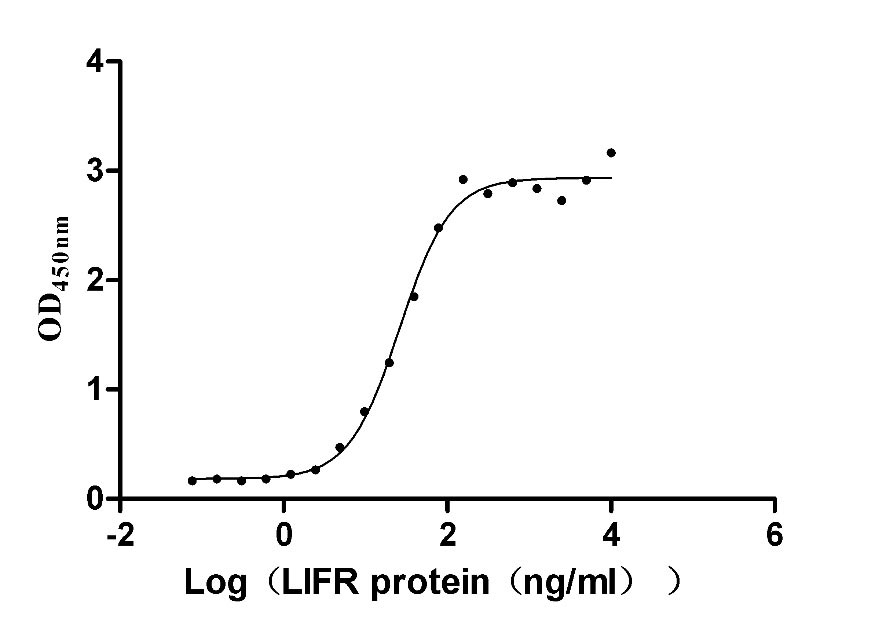
Recombinant Human Leukemia inhibitory factor (LIF) (Active)
Express system: Mammalian cell
Species: Homo sapiens (Human)
-
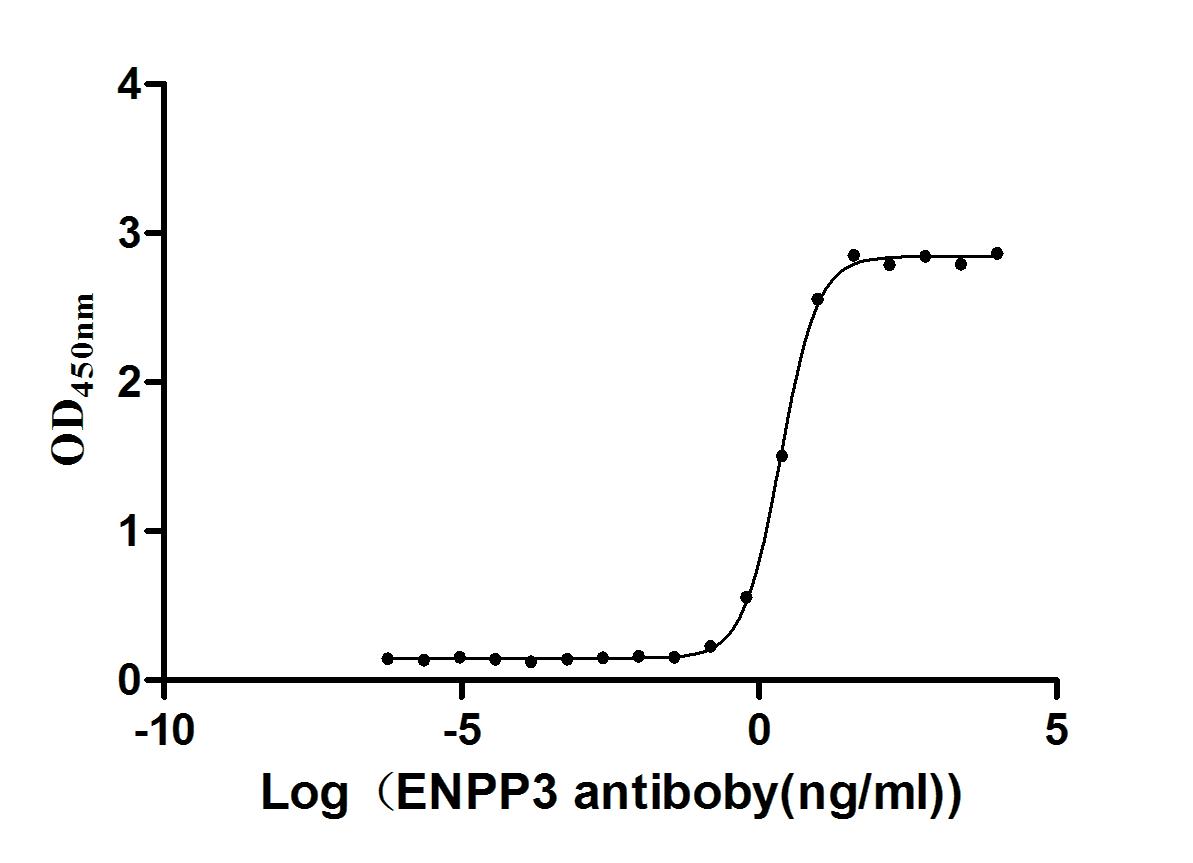
Express system: Mammalian cell
Species: Homo sapiens (Human)
-
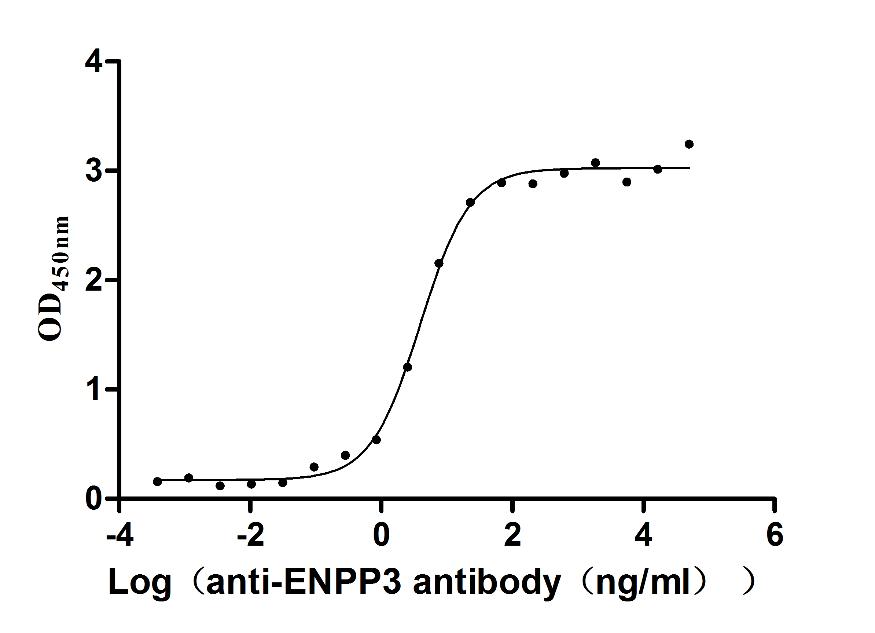
Express system: Mammalian cell
Species: Macaca fascicularis (Crab-eating macaque) (Cynomolgus monkey)
-
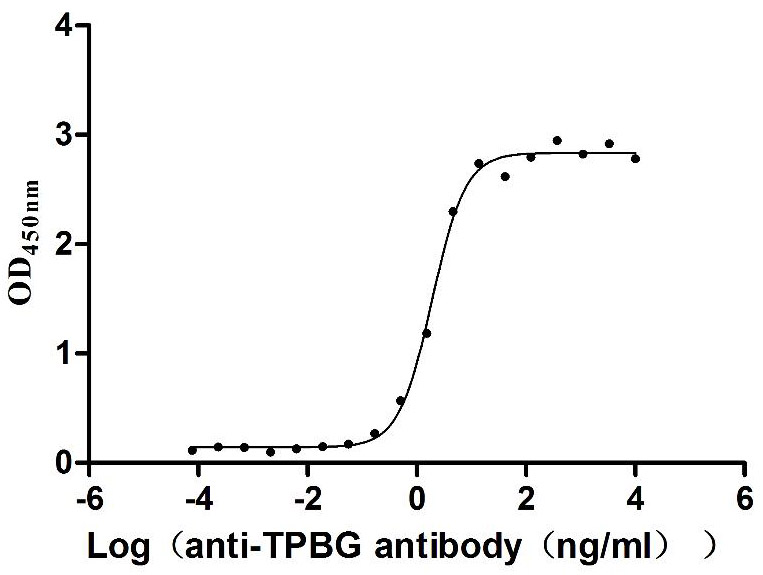
Recombinant Macaca fascicularis Trophoblast glycoprotein (TPBG), partial (Active)
Express system: Mammalian cell
Species: Macaca fascicularis (Crab-eating macaque) (Cynomolgus monkey)
-
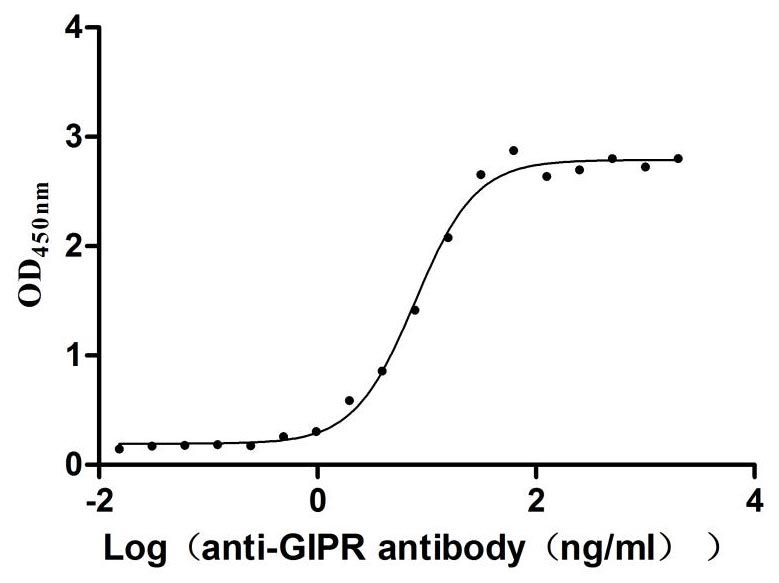
Recombinant Rat Gastric inhibitory polypeptide receptor (Gipr), partial (Active)
Express system: Mammalian cell
Species: Rattus norvegicus (Rat)
-
-AC1.jpg)
Recombinant Human Tumor necrosis factor ligand superfamily member 15(TNFSF15) (Active)
Express system: Mammalian cell
Species: Homo sapiens (Human)
-
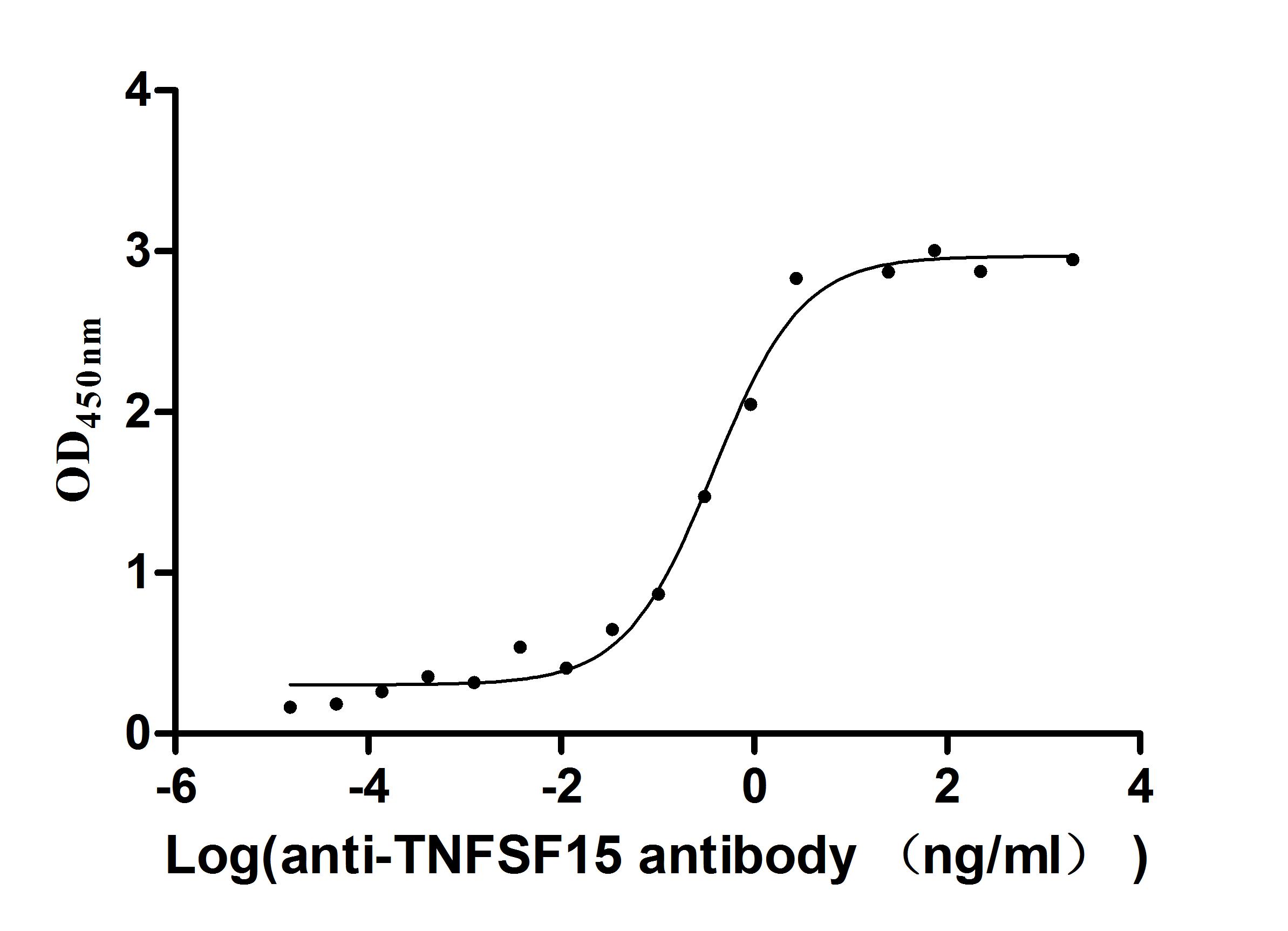
Express system: Mammalian cell
Species: Homo sapiens (Human)
-
Recombinant Human Interleukin-1 receptor accessory protein (IL1RAP), partial (Active)
Express system: Mammalian cell
Species: Homo sapiens (Human)