Recombinant Mouse Programmed cell death protein 1 (Pdcd1), partial
-
中文名稱:Recombinant Mouse Programmed cell death protein 1 (Pdcd1), partial
-
品名簡(jiǎn)稱:Recombinant Mouse Pdcd1 protein, partial
-
貨號(hào):CSB-MP3745MO
-
說明書:
-
規(guī)格:¥612
-
圖片:
-
 (Tris-Glycine gel) Discontinuous SDS-PAGE (reduced) with 5% enrichment gel and 15% separation gel.
-
-
其他:
產(chǎn)品詳情
-
純度:Greater than 95% as determined by SDS-PAGE.
-
生物活性:Not Test
-
基因名:
-
Uniprot No.:
-
別名:Protein PD-1 ;mPD-1;CD279
-
種屬:Mus musculus (Mouse)
-
蛋白長(zhǎng)度:Partial
-
來源:Mammalian cell
-
分子量:42.8 kDa
-
表達(dá)區(qū)域:25-167aa
-
氨基酸序列LEVPNGPWRSLTFYPAWLTVSEGANATFTCSLSNWSEDLMLNWNRLSPSNQTEKQAAFCNGLSQPVQDARFQIIQLPNRHDFHMNILDTRRNDSGIYLCGAISLHPKAKIEESPGAELVVTERILETSTRYPSPSPKPEGRFQ
Note: The complete sequence may include tag sequence, target protein sequence, linker sequence and extra sequence that is translated with the protein sequence for the purpose(s) of secretion, stability, solubility, etc.
If the exact amino acid sequence of this recombinant protein is critical to your application, please explicitly request the full and complete sequence of this protein before ordering. -
蛋白標(biāo)簽:C-terminal mFc1-tagged
-
產(chǎn)品提供形式:Liquid or Lyophilized powder
Note: We will preferentially ship the format that we have in stock, however, if you have any special requirement for the format, please remark your requirement when placing the order, we will prepare according to your demand. -
緩沖液:If the delivery form is liquid, the default storage buffer is Tris/PBS-based buffer, 5%-50% glycerol. If the delivery form is lyophilized powder, the buffer before lyophilization is Tris/PBS-based buffer, 6% Trehalose, pH 8.0.
-
復(fù)溶:We recommend that this vial be briefly centrifuged prior to opening to bring the contents to the bottom. Please reconstitute protein in deionized sterile water to a concentration of 0.1-1.0 mg/mL.We recommend to add 5-50% of glycerol (final concentration) and aliquot for long-term storage at -20℃/-80℃. Our default final concentration of glycerol is 50%. Customers could use it as reference.
-
儲(chǔ)存條件:Store at -20°C/-80°C upon receipt, aliquoting is necessary for mutiple use. Avoid repeated freeze-thaw cycles.
-
保質(zhì)期:The shelf life is related to many factors, storage state, buffer ingredients, storage temperature and the stability of the protein itself.
Generally, the shelf life of liquid form is 6 months at -20°C/-80°C. The shelf life of lyophilized form is 12 months at -20°C/-80°C. -
貨期:Basically, we can dispatch the products out in 3-7 working days after receiving your orders. Delivery time may differ from different purchasing way or location, please kindly consult your local distributors for specific delivery time.
-
Datasheet & COA:Please contact us to get it.
產(chǎn)品評(píng)價(jià)

相關(guān)產(chǎn)品
靶點(diǎn)詳情
-
功能:Inhibitory receptor on antigen activated T-cells that plays a critical role in induction and maintenance of immune tolerance to self. Delivers inhibitory signals upon binding to ligands, such as CD274/PDCD1L1 and CD273/PDCD1LG2. Following T-cell receptor (TCR) engagement, PDCD1 associates with CD3-TCR in the immunological synapse and directly inhibits T-cell activation. Suppresses T-cell activation through the recruitment of PTPN11/SHP-2: following ligand-binding, PDCD1 is phosphorylated within the ITSM motif, leading to the recruitment of the protein tyrosine phosphatase PTPN11/SHP-2 that mediates dephosphorylation of key TCR proximal signaling molecules, such as ZAP70, PRKCQ/PKCtheta and CD247/CD3zeta. The PDCD1-mediated inhibitory pathway is exploited by tumors to attenuate anti-tumor immunity and facilitate tumor survival.
-
基因功能參考文獻(xiàn):
- Oncolytic herpes virotherapy and PD-1 blockade in a murine rhabdomyosarcoma model is an efficient treatment strategy. PMID: 28539588
- These results show that PD-1 plays an inhibitory role during the naive-to-effector CD8 T cell transition and that the PD-1 pathway can also be modulated at this stage of T cell differentiation. PMID: 29654146
- Blockade of CCR5-mediated myeloid derived suppressor cell accumulation enhances anti-PD1 efficacy in gastric cancer PMID: 29303012
- T-cell activation mediates the immunopreventive effects of anti-PD-1; PD-1 on T cells interacts with the PD-1 ligand PD-L1 on cancer cells PMID: 29018057
- these data show that PD-1 expression is an intrinsic property of brain-resident memory CD8 T cells in a persistent CNS viral infection PMID: 28829048
- Our results demonstrate that entinostat enhances the antitumor effect of PD-1 targeting through functional inhibition of MDSCs and a transition away from an immune-suppressive tumor microenvironment. These data provide a mechanistic rationale for the clinical testing and potential markers of response of this novel combination in solid tumor patients. PMID: 28698201
- synergism in cell death by Caspase-1- and RipK3 resulted in restriction of PD-1 and TIM3 expression on primed CD8(+) T cells, which promoted the survival of activated CD8(+) T cells. PMID: 28686578
- Tim-3 and PD-1 pathways play critical roles in regulating CD8(+) T cell function and maintaining normal pregnancy. PMID: 28331165
- Anti-PD-1/PD-L1 therapy inhibited CMT167 orthotopic lung tumors by 95%. .Silencing PD-L1 expression in CMT167 cells resulted in smaller orthotopic tumors that remained sensitive to anti-PD-L1 therapy, whereas implantation of CMT167 cells into PD-L1(-) mice blocked orthotopic tumor growth, indicating a role for PD-L1 in both the cancer cell and the microenvironment. PMID: 28819064
- Combination therapies that depend on checkpoint inhibitor antibodies (Abs) such as for PD-1 or its ligand (PD-L1) together with immune stimulatory agonist Abs like anti-OX40 are being tested in the clinic to achieve improved antitumor effects PMID: 28848055
- Inhibition of Fut8, a core fucosyltransferase, by genetic ablation or pharmacologic inhibition reduced cell-surface expression of PD-1 and enhanced T cell activation, leading to more efficient tumor eradication. PMID: 28768188
- An examination of the mechanisms of immunity behind this long-term protection in PD-1 knockout mice showed a key role for parasite-specific CD8(+) T cells even when CD4(+) T cells and B cells responded to re-infection. PMID: 27217330
- To test the in vivo activity of REGN2810, which does not cross-react with murine PD-1, knock-in mice were generated to express a hybrid protein containing the extracellular domain of human PD-1, and transmembrane and intracellular domains of mouse PD-1 PMID: 28265006
- The combination of tumor vaccination to induce high avidity tumor specific T cell responses and PD-1 blockade synergises to provide tumor therapy and 85% survival in the aggressive B16 melanoma model. PMID: 27825115
- Blockade of PD-1 with monoclonal antibody may be an effective treatment during the postoperative period for restoring surgery-induced immunosuppression. PMID: 28320090
- Data suggest that genetic or environmental factors that even moderately affect the expression of both PD-1 and FoxP3 can cause life-threatening autoimmune diseases by disrupting the T-cell homeostasis. PMID: 27410049
- Data (including data from studies in transgenic/knockout mice) suggest that T-cell expression of Mirn155 is required to limit melanoma growth; miR-155, Pdcd1, Pdcd1l1, and Ctla4 appear to regulate overlapping pathways promoting antitumor immunity. [Mirn155 = microRNA 155; Pdcd1 = programmed cell death 1 protein; Pdcd1l1 = programmed cell death 1 ligand 1 protein; Ctla4 = cytotoxic T-lymphocyte-associated protein 4] PMID: 28912267
- PD-1 plays a vital role in brain inflammation via regulation of Fgl-2 after ICH, and that manipulation of PD-1 might be a promising therapeutical target in ICH. PMID: 27717876
- The identification of the role for PD-1 in regulating B cell-dependent antitumor immunity to Tn antigen highlights an opportunity to develop new therapeutic strategies targeting tumor-associated carbohydrate antigens PMID: 27856425
- These findings suggest that PD-1 pathway blockade may reverse adaptive immune resistance following cyclic dinucleotide treatment, enhancing both local and systemic antitumor immunity. PMID: 27821498
- data suggest that increased expression of checkpoint blockade molecules PD-1 and CTLA-4 on donor T cells is not sufficient to prevent GvHD, and that cooperation between checkpoint blockade signaling by host cells and donor Tregs is necessary to limit GvHD in allo-HSCT recipients PMID: 28953925
- PD-1 Blockade Promotes Epitope Spreading in Anticancer CD8(+) T Cell Responses by Preventing Fratricidal Death of Subdominant Clones To Relieve Immunodomination PMID: 28939757
- Adoptive transfer of murine T cells expressing a chimeric-PD1-Dap10 receptor may induce a preferential cytokine profile and T-cell differentiation phenotype for anti-lymphoma therapies. PMID: 28670716
- soluble PD-1 is elevated in critical illness and may represent a potential biomarker for Acute respiratory distress syndrome. PMID: 27835962
- Together, our results suggest an important role of PD-1 in glioma-induced immune escape, and provide translational evidence for the use of PD-1 blocking antibodies in human malignant gliomas. PMID: 28681455
- study found that Bcl6 positively regulates PD-1 expression by inhibiting the ability of T-bet/Tbx21 to repress Pdcd1 transcription. PMID: 28586108
- PD-L1 selectively enhances T cell-mediated immune responses, driving graft-versus-host disease lethality and suggesting a context-dependent function of the PD-1/PD-L1 axis PMID: 27294527
- PD-1 is required for maintaining the number, and hence function, of KLRG1(+) Group 2 innate lymphoid cells. PMID: 28490441
- this study shows that PD-1 regulates early glycolytic and mitochondrial alterations in virus-specific CD8+ T cells generated during infection, and represses transcriptional coactivator PGC-1alpha PMID: 27496729
- Our results suggest that anti-PD-1 antibody treatment has little effect on afatinib-induced lung injury. PMID: 28756224
- both mouse and human tumour-associated macrophages (TAM) express PD-1; TAM PD-1 expression increases over time in mouse models of cancer and with increasing disease stage in primary human cancers PMID: 28514441
- These data implicate a critical role for conserved region C (CR-C), a promoter proximal cis-regulatory element that is critical to PD-1 expression in vitro, in governing PD-1 expression, and a subsequent role in guiding CD8 T cell differentiation PMID: 27895178
- we provide evidence that indicates that the PD-1(+) fraction of DN T cells represents self-reactive cells. PMID: 27060346
- PD-1 receptor has a role in interacting with programmed cell death ligands and B7-1 PMID: 28270509
- PD-1 is upregulated in CD4+ T cells in Schistosoma japonicum (S. japonicum)-infected mice. PMID: 27792733
- Findings indicated that METH induced the upregulation of PD-1 expression which altered the cytokine production as well as cytotoxic functions in mouse model of lymphocytic choriomeningitis virus infection. PMID: 27760221
- Taken together, our data demonstrate the importance of CD40 signaling in the conversion of CTL exhaustion and its ability to enhance PD-1 antagonist action in rescuing exhausted CTLs in chronic infection. PMID: 28153727
- Our proteogenomic analysis demonstrates a role of Smad4 loss in the PD-L1 immune evasion, as well as Il1rl1's role in CSC-like properties of NCC-S1M. PMID: 28153736
- These studies indicate that PD-1 is a critical homeostatic regulator for Tregs by modulating proliferation and apoptosis during IL-2 therapy. PMID: 28151427
- data defined PD-1(hi)IL-25R(hi) as an early checkpoint in Innate lymphoid cell development; results provide a perspective for exploring PD-1 and its ligand (PD-L1) in immunotherapy, and allow effective manipulation of the immune system for disease prevention and therapy PMID: 27749818
- Authors demonstrate that inactivation of the PD-1 gene in melanoma-reactive CD8(+) T cells and in fibrosarcoma-reactive polyclonal T cells enhanced the persistence of PD-1 gene-modified T cells at the tumor site and increased tumor control. PMID: 27197251
- PD-1/PD-L1 plays a crucial role in maintaining immune tolerance induced by UVB-iDCs, as well as in actively controlling effector T cells specific to alloantigens. PMID: 27556047
- PD-1 dampens antigen-specific Th17 response, thus inhibiting autoimmune arthritis PMID: 27197661
- Tim-3(+) PD-1(+) CD8(+) T cells showed more evident properties associated with exhaustion than Tim-3(-) PD-1(+) CD8(+) T cells. PMID: 26750587
- that porcine islet-specific tolerance is dependent on PD-1, which could not be extended to skin grafts PMID: 26109574
- Programmed cell death-1 engagement followed by zymosan stimulation might primarily attenuate the phosphorylation of tyrosine residue in Programmed cell death-1 receptor/ligand. PMID: 26913605
- these data suggest a scenario in which microglia are involved in the regulation of experimental autoimmune encephalomyelitis by suppressing Th1-cell differentiation via the PD-L1-nitric oxide pathway. PMID: 26769487
- Blockade of TGFbeta downregulated PD-1 and PD-L1 expression and precipitated graft rejection. PMID: 26824266
- PD-1 regulates peripheral T-cell responses in both human and murine rheumatoid arthritis PMID: 26608464
- Decidual NK, NKT and gamma/delta T cells showed increased PD-1 expression and reduced cytotoxic potential when compared to the periphery. PMID: 26278059
顯示更多
收起更多
-
亞細(xì)胞定位:Cell membrane; Single-pass type I membrane protein.
-
組織特異性:Thymus-specific.
-
數(shù)據(jù)庫(kù)鏈接:
Most popular with customers
-
f4-AC1.jpg)
Recombinant Human Claudin-6 (CLDN6)-VLPs, Fluorescent (Active)
Express system: Mammalian cell
Species: Homo sapiens (Human)
-
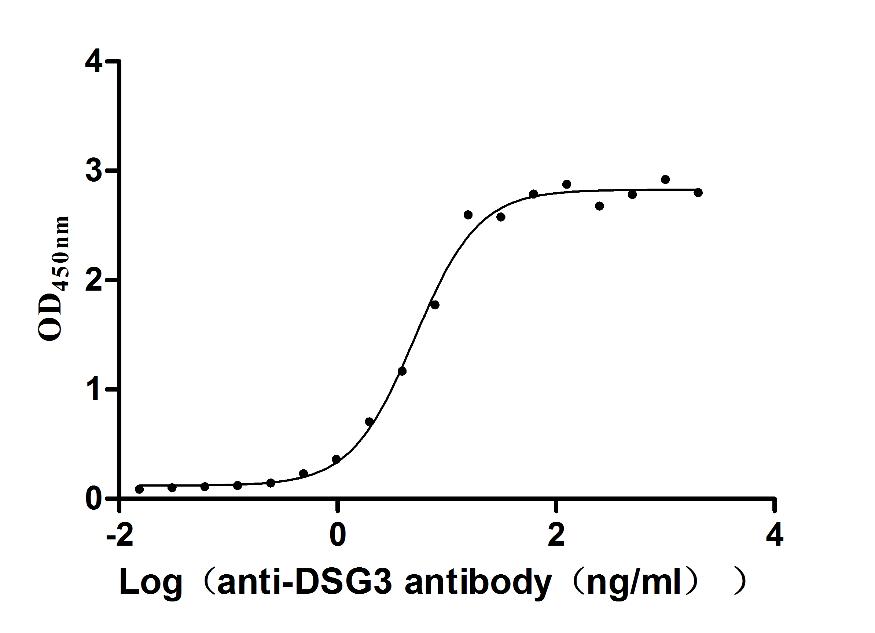
Recombinant Human Desmoglein-3 (DSG3), partial (Active)
Express system: Baculovirus
Species: Homo sapiens (Human)
-
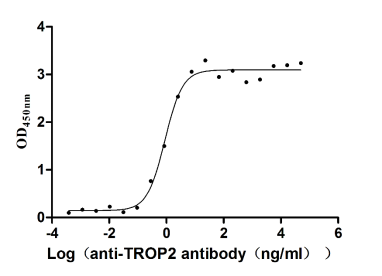
Recombinant Human Tumor-associated calcium signal transducer 2 (TACSTD2), partial (Active)
Express system: Mammalian cell
Species: Homo sapiens (Human)
-
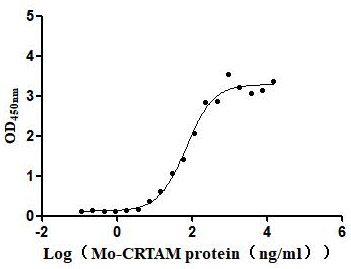
Recombinant Mouse Cell adhesion molecule 1 (Cadm1), partial (Active)
Express system: Mammalian cell
Species: Mus musculus (Mouse)
-
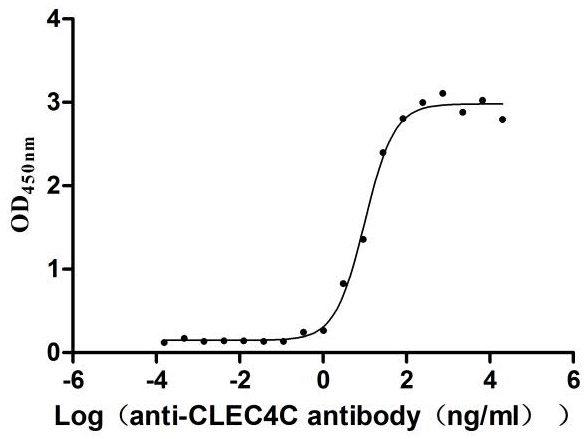
Recombinant Human C-type lectin domain family 4 member C (CLEC4C), partial (Active)
Express system: Mammalian cell
Species: Homo sapiens (Human)
-
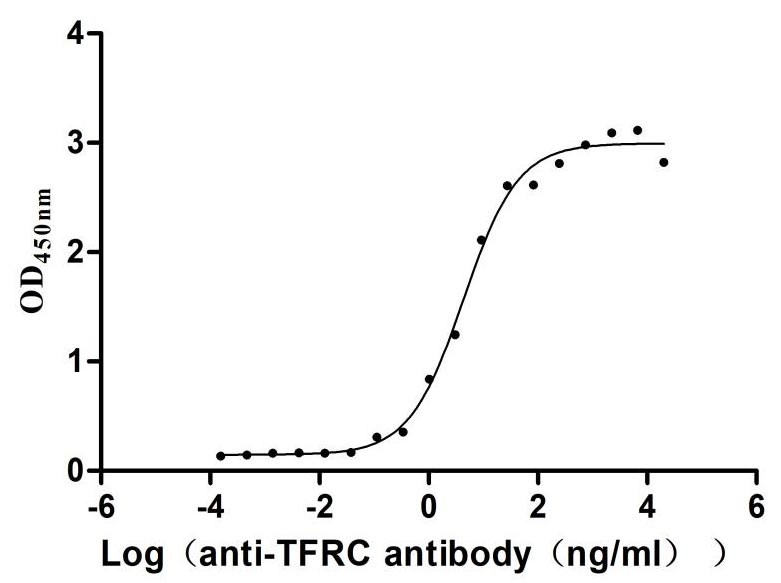
Recombinant Human Transferrin receptor protein 1 (TFRC), partial (Active)
Express system: Mammalian cell
Species: Homo sapiens (Human)