Recombinant Mouse G protein-coupled receptor kinase 5 (Grk5)
-
中文名稱:小鼠Grk5重組蛋白
-
貨號(hào):CSB-YP009926MO
-
規(guī)格:
-
來源:Yeast
-
其他:
-
中文名稱:小鼠Grk5重組蛋白
-
貨號(hào):CSB-EP009926MO
-
規(guī)格:
-
來源:E.coli
-
其他:
-
中文名稱:小鼠Grk5重組蛋白
-
貨號(hào):CSB-EP009926MO-B
-
規(guī)格:
-
來源:E.coli
-
共軛:Avi-tag Biotinylated
E. coli biotin ligase (BirA) is highly specific in covalently attaching biotin to the 15 amino acid AviTag peptide. This recombinant protein was biotinylated in vivo by AviTag-BirA technology, which method is BriA catalyzes amide linkage between the biotin and the specific lysine of the AviTag.
-
其他:
-
中文名稱:小鼠Grk5重組蛋白
-
貨號(hào):CSB-BP009926MO
-
規(guī)格:
-
來源:Baculovirus
-
其他:
-
中文名稱:小鼠Grk5重組蛋白
-
貨號(hào):CSB-MP009926MO
-
規(guī)格:
-
來源:Mammalian cell
-
其他:
產(chǎn)品詳情
-
純度:>85% (SDS-PAGE)
-
基因名:
-
Uniprot No.:
-
別名:Grk5; Gprk5G protein-coupled receptor kinase 5; EC 2.7.11.16; G protein-coupled receptor kinase GRK5
-
種屬:Mus musculus (Mouse)
-
蛋白長度:full length protein
-
表達(dá)區(qū)域:1-590
-
氨基酸序列MELENIVANT VLLKAREGGG GKRKGKSKKW KEILKFPHIS QCEDLRRTID RDYYSLCDKQ PIGRLLFRQF CETRPGLECY IQFLDLVAEY EITPDENLGA KGKEIMTKYL TPKSPVFIAQ VGQDLVSQTE KKLLQSPCKE LFSACAQSVH DYLKGDPFHE YLDSMYFDRF LQWKWLERQP VTKNTFRQYR VLGKGGFGEV CACQVRATGK MYACKRLEKK RIKKRKGESM ALNEKQILEK VNSQFVVNLA YAYETKDALC LVLTIMNGGD LKFHIYNMGN PGFEEERALF YAAEILCGLE DLHRENTVYR DLKPENILLD DYGHIRISDL GLAVKIPEGD LIRGRVGTVG YMAPEVLNNQ RYGLSPDYWG LGCLIYEMIE GQSPFRGRKE KVKREEVDRR VLETEEVYSS KFSEEAKSIC NMLLTKDSKQ RLGCQEEGAA EVKRHPFFRN MNFKRLEAGM LDPPFVPDPR AVYCKDVLDI EQFSTVKGVN LDHTDDDFYS KFSTGSVPIP WQNEMIETEC FKELNVFGPN GTLSPDLNRS QPPEPPKKGL FHRLFRRQHQ SNSKSSPTPK TSCNHRINSN HINSNSTGSS
-
蛋白標(biāo)簽:Tag?type?will?be?determined?during?the?manufacturing?process.
The tag type will be determined during production process. If you have specified tag type, please tell us and we will develop the specified tag preferentially. -
產(chǎn)品提供形式:Lyophilized powder
Note: We will preferentially ship the format that we have in stock, however, if you have any special requirement for the format, please remark your requirement when placing the order, we will prepare according to your demand. -
復(fù)溶:We recommend that this vial be briefly centrifuged prior to opening to bring the contents to the bottom. Please reconstitute protein in deionized sterile water to a concentration of 0.1-1.0 mg/mL.We recommend to add 5-50% of glycerol (final concentration) and aliquot for long-term storage at -20℃/-80℃. Our default final concentration of glycerol is 50%. Customers could use it as reference.
-
儲(chǔ)存條件:Store at -20°C/-80°C upon receipt, aliquoting is necessary for mutiple use. Avoid repeated freeze-thaw cycles.
-
保質(zhì)期:The shelf life is related to many factors, storage state, buffer ingredients, storage temperature and the stability of the protein itself.
Generally, the shelf life of liquid form is 6 months at -20°C/-80°C. The shelf life of lyophilized form is 12 months at -20°C/-80°C. -
貨期:Delivery time may differ from different purchasing way or location, please kindly consult your local distributors for specific delivery time.Note: All of our proteins are default shipped with normal blue ice packs, if you request to ship with dry ice, please communicate with us in advance and extra fees will be charged.
-
注意事項(xiàng):Repeated freezing and thawing is not recommended. Store working aliquots at 4°C for up to one week.
-
Datasheet :Please contact us to get it.
產(chǎn)品評(píng)價(jià)

靶點(diǎn)詳情
-
功能:Serine/threonine kinase that phosphorylates preferentially the activated forms of a variety of G-protein-coupled receptors (GPCRs). Such receptor phosphorylation initiates beta-arrestin-mediated receptor desensitization, internalization, and signaling events leading to their down-regulation. Phosphorylates a variety of GPCRs, including adrenergic receptors, muscarinic acetylcholine receptors (more specifically Gi-coupled M2/M4 subtypes), dopamine receptors and opioid receptors. In addition to GPCRs, also phosphorylates various substrates: Hsc70-interacting protein/ST13, TP53/p53, HDAC5, and arrestin-1/ARRB1. Phosphorylation of ARRB1 by GRK5 inhibits G-protein independent MAPK1/MAPK3 signaling downstream of 5HT4-receptors. Phosphorylation of HDAC5, a repressor of myocyte enhancer factor 2 (MEF2) leading to nuclear export of HDAC5 and allowing MEF2-mediated transcription. Phosphorylation of TP53/p53, a crucial tumor suppressor, inhibits TP53/p53-mediated apoptosis. Phosphorylation of ST13 regulates internalization of the chemokine receptor. Phosphorylates rhodopsin (RHO) (in vitro) and a non G-protein-coupled receptor, LRP6 during Wnt signaling (in vitro).
-
基因功能參考文獻(xiàn):
- Along with other supporting evidence, the authors propose that GRK5 deficiency selectively renders basal forebrain cholinergic neurons more vulnerable to degeneration. PMID: 27193825
- Overall, these data suggest that GRK5 negatively regulates CXCL1/KC levels during bacterial pneumonia but that the role of GRK5 in the clinical outcome in this model is dependent on the bacterial dose. PMID: 26975990
- Generated mice with genetic knockout (KO) of the G protein-coupled receptor kinase (GRK) 5 gene by microinjection of TALEN mRNA. TALEN vectors were designed to target exons 1, 3, and 5 of the mouse GRK5 gene. PMID: 27565865
- These results of this study suggest that GRK5 deficiency indeed makes the mice more susceptible to wide range of behavioral impairments, including cognitive impairments. PMID: 26778781
- MOR phosphorylation is regulated by agonist-selective recruitment of distinct GRK isoforms that influence different opioid-related behaviors. Modulation of GRK5 function could serve as a new approach for preventing addiction to opioids. PMID: 24629717
- GRK5, acting in a kinase independent manner, is a facilitator of NFAT activity and part of a DNA-binding complex responsible for pathological hypertrophic gene transcription. PMID: 25332207
- influence of GRK5 on NF-kappaB expression and activity PMID: 24174526
- regulator of inflammation and thymic apoptosis in polymicrobial sepsis PMID: 23485819
- these data identified GRK5 as a positive regulator of insulin sensitivity. PMID: 23111327
- metoprolol is a biased ligand that selectively activates a G protein-independent and GRK5/beta-arrestin2-dependent pathway, and induces cardiac fibrosis. PMID: 22888001
- These results define myocyte GRK5 as a critical regulator of pathological cardiac growth after ventricular pressure overload, supporting its role as an endogenous (patho)-physiological HDAC kinase. PMID: 22859683
- these results suggest that GRK5 is an important regulator of adipogenesis and is crucial for the development of diet-induced obesity. PMID: 22507984
- GRK5 regulates IL-12p40 and G-CSF via a mechanism that is common to both MyD88 and TRIF. PMID: 22078319
- G protein-coupled receptor kinase-5 attenuates atherosclerosis by regulating receptor tyrosine kinases and 7-transmembrane receptors. PMID: 22095977
- GRK5 is a positive regulator of TLR4-induced IkappaBalpha-NFkappaB pathway as well as a key modulator of LPS-induced inflammatory response. PMID: 20945396
- GRK5 deficiency accelerates {beta}-amyloid accumulation in Tg2576 mice via impaired cholinergic activity PMID: 21041302
- GRK5 as a novel kinase of p53, as well as a negative regulator of p53-mediated signal transduction. PMID: 20124405
- Results identify GRK5/6 as novel kinases for the single transmembrane receptor LRP6 during Wnt signaling. PMID: 19801552
- Results demonstrate that both GRK2 and GRK5 are important and novel mediators of a non-traditional IkappaBalpha/NF-kappaB signalling pathway. PMID: 19796012
- GRK5 regulates pulmonary responses in a tissue- and receptor-specific manner but does not regulate peripheral cardiac muscarinic receptors. PMID: 14565944
- in both male and female mice, vascular smooth muscle-specific overexpression of GRK5 elevates blood pressure mediated by Gi and by beta1AR in males and Ang II receptors in females PMID: 16103237
- Taken together, these findings not only strongly support an important role of GRK5 deficiency in early Alzheimer's pathogenesis, but also promote the GRK5 knockout mouse as an additional model for early Alzheimer-related studies. PMID: 17011668
- These results demonstrate previously unknown crucial regulatory mechanisms that alter ARR/GRK expression levels in macrophages that might modify many, if not all, GPCR-mediated innate immune responses. PMID: 18180038
- GRK5 deficiency in vivo significantly exaggerates microgliosis and astrogliosis in the presence of an inflammatory initiator, such as the excess fibrillar Abeta and the subsequent active inflammatory reactions. PMID: 18522748
- Data show that GRK5 knockout female mouse displays increased hippocampal axonal defects and synaptic degenerative changes. PMID: 18955119
顯示更多
收起更多
-
亞細(xì)胞定位:Cytoplasm. Nucleus. Cell membrane; Peripheral membrane protein.
-
蛋白家族:Protein kinase superfamily, AGC Ser/Thr protein kinase family, GPRK subfamily
-
數(shù)據(jù)庫鏈接:
Most popular with customers
-
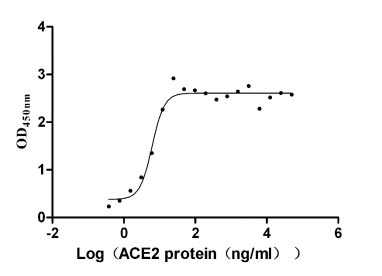
Recombinant Paguma larvata Angiotensin-converting enzyme 2 (ACE2), partial (Active)
Express system: Mammalian cell
Species: Paguma larvata (Masked palm civet)
-
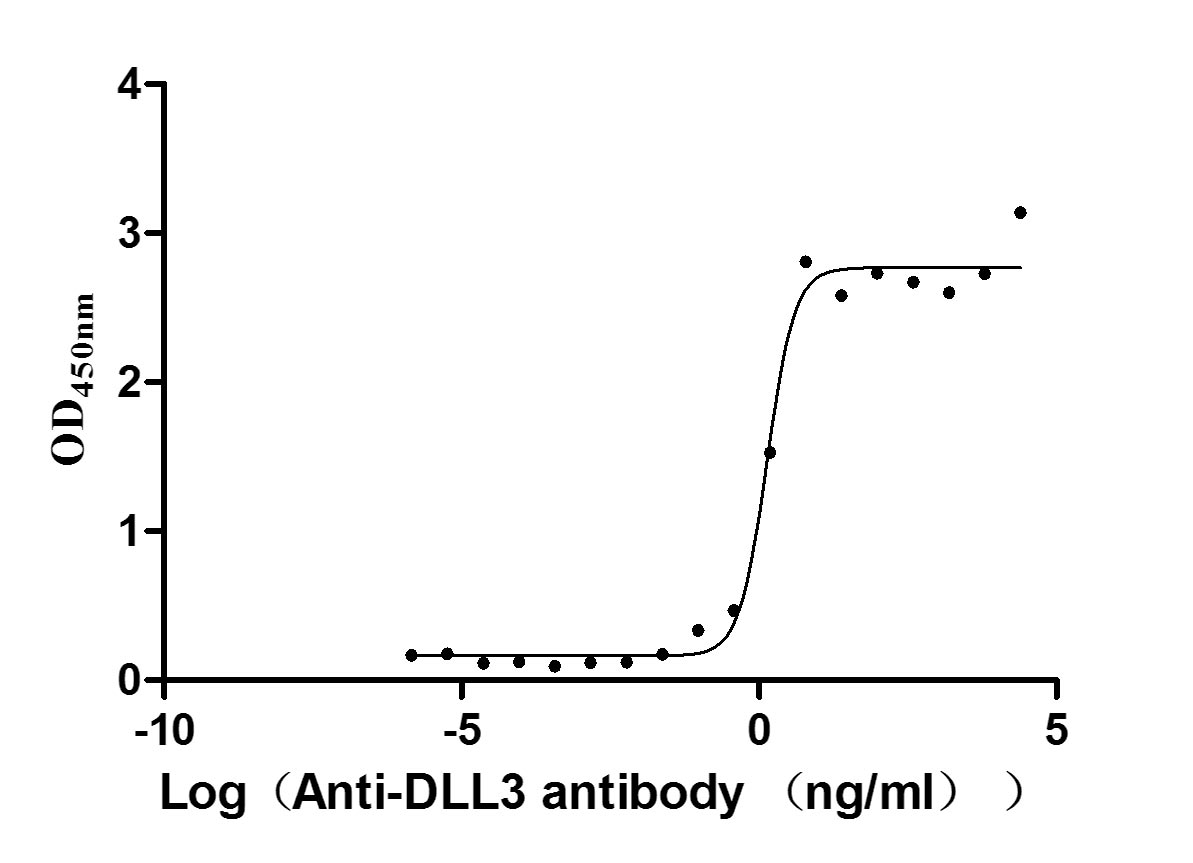
Recombinant Human Delta-like protein 3 (DLL3), partial (Active)
Express system: Mammalian cell
Species: Homo sapiens (Human)
-
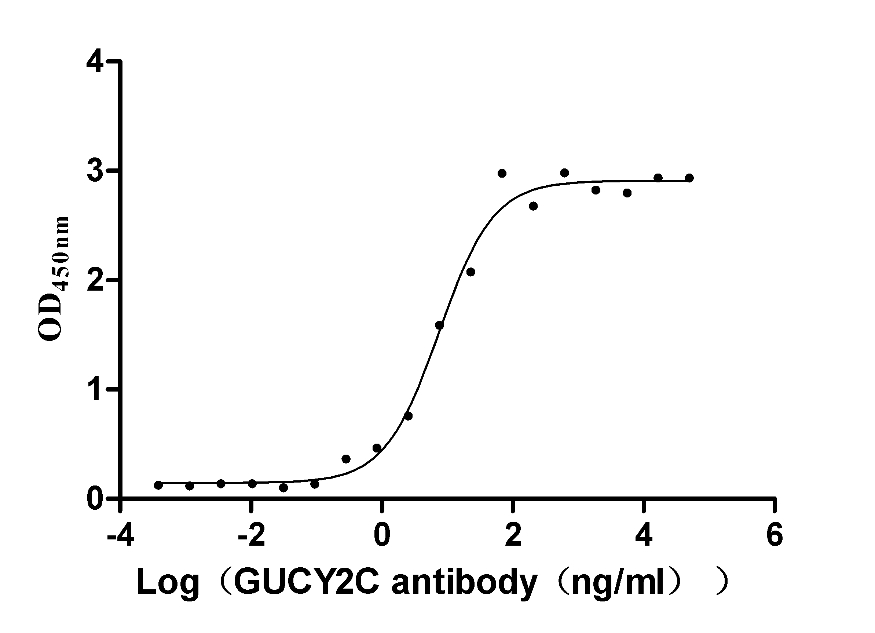
Recombinant Human Heat-stable enterotoxin receptor (GUCY2C), partial (Active)
Express system: Mammalian cell
Species: Homo sapiens (Human)
-
-AC1.jpg)
Recombinant Human Interleukin-17A (IL17A) (T26A) (Active)
Express system: Baculovirus
Species: Homo sapiens (Human)
-
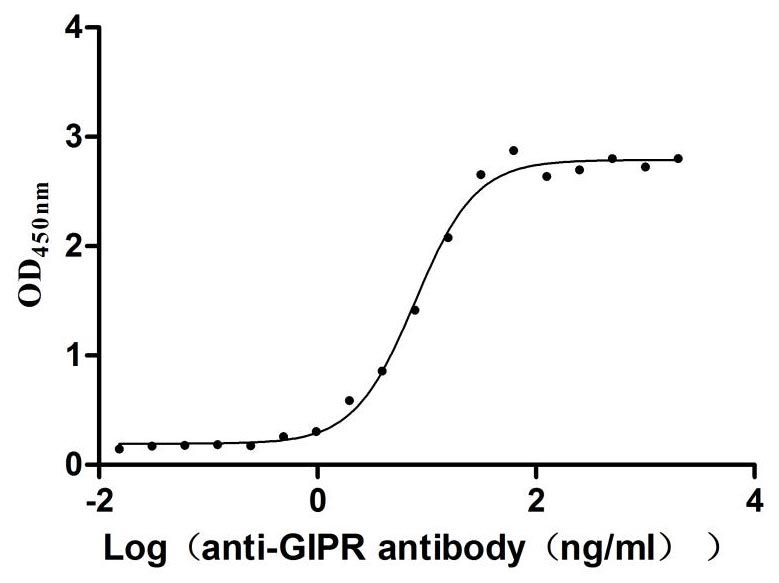
Recombinant Rat Gastric inhibitory polypeptide receptor (Gipr), partial (Active)
Express system: Mammalian cell
Species: Rattus norvegicus (Rat)
-
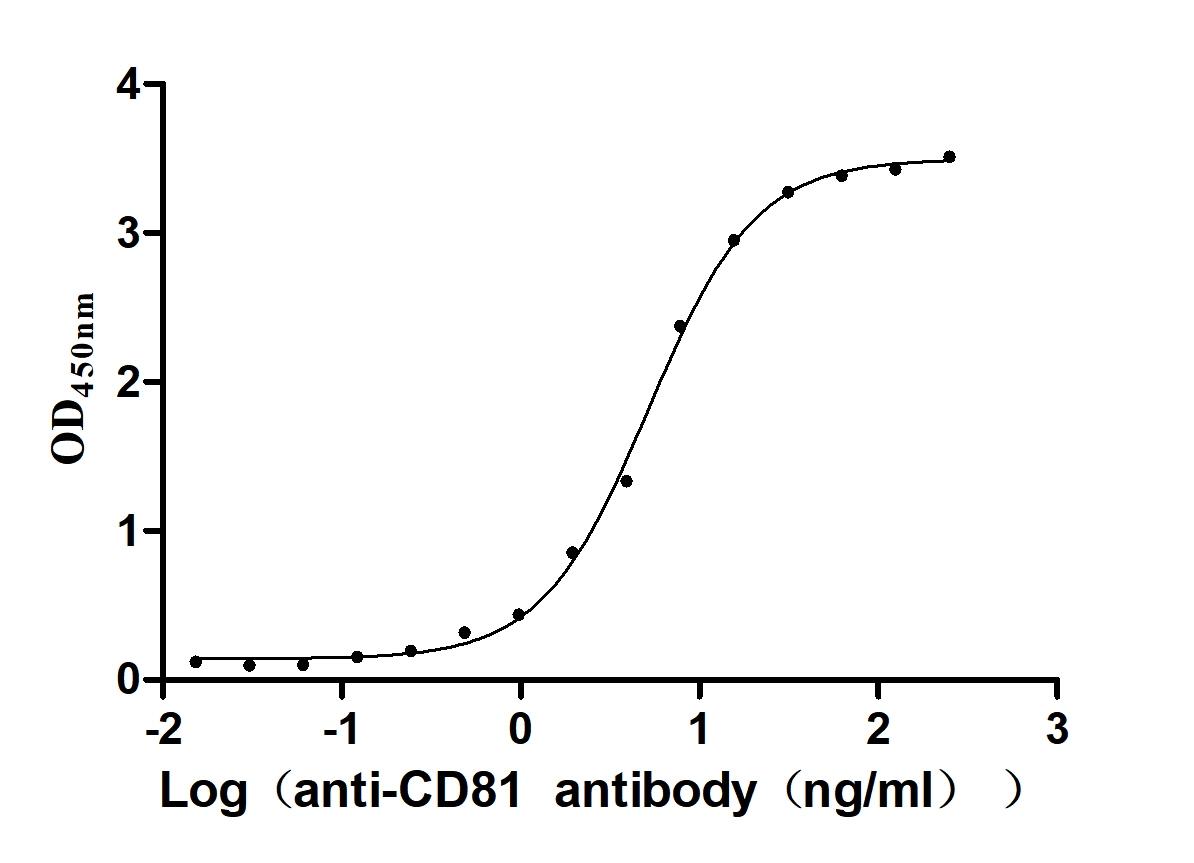
Recombinant Human CD81 antigen (CD81), partial (Active)
Express system: Mammalian cell
Species: Homo sapiens (Human)
-
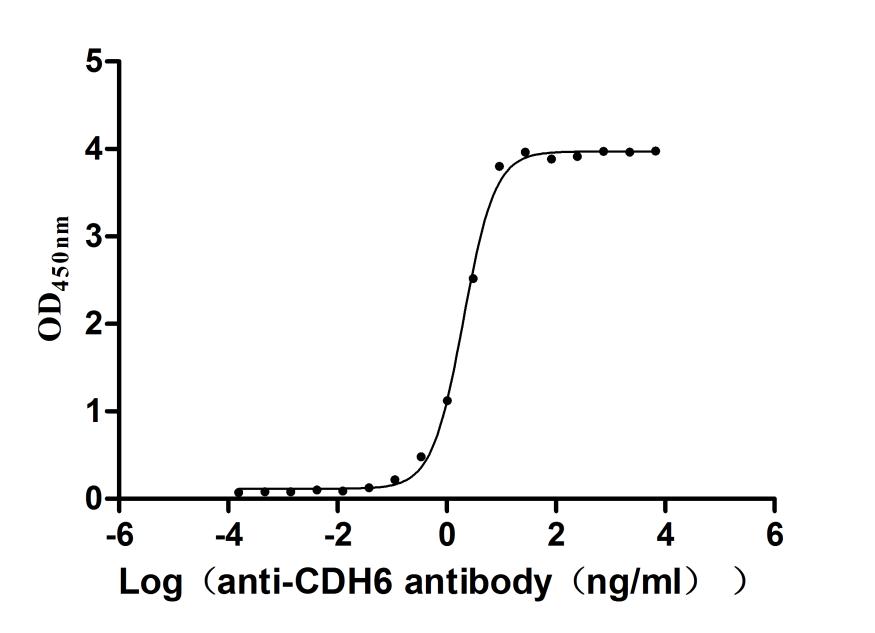
Recombinant Mouse Cadherin-6 (Cdh6), partial (Active)
Express system: Mammalian cell
Species: Mus musculus (Mouse)