Recombinant Human Protein FAM5C (FAM5C)
-
中文名稱:Recombinant Human Protein FAM5C(FAM5C)
-
貨號:CSB-YP755233HU
-
規格:
-
來源:Yeast
-
其他:
-
中文名稱:Recombinant Human Protein FAM5C(FAM5C)
-
貨號:CSB-EP755233HU
-
規格:
-
來源:E.coli
-
其他:
-
中文名稱:Recombinant Human Protein FAM5C(FAM5C)
-
貨號:CSB-EP755233HU-B
-
規格:
-
來源:E.coli
-
共軛:Avi-tag Biotinylated
E. coli biotin ligase (BirA) is highly specific in covalently attaching biotin to the 15 amino acid AviTag peptide. This recombinant protein was biotinylated in vivo by AviTag-BirA technology, which method is BriA catalyzes amide linkage between the biotin and the specific lysine of the AviTag.
-
其他:
-
中文名稱:Recombinant Human Protein FAM5C(FAM5C)
-
貨號:CSB-BP755233HU
-
規格:
-
來源:Baculovirus
-
其他:
-
中文名稱:Recombinant Human Protein FAM5C(FAM5C)
-
貨號:CSB-MP755233HU
-
規格:
-
來源:Mammalian cell
-
其他:
產品詳情
-
純度:>85% (SDS-PAGE)
-
基因名:
-
Uniprot No.:
-
別名:BRINP3; DBCCR1L; DBCCR1L1; FAM5CBMP/retinoic acid-inducible neural-specific protein 3; DBCCR1-like protein 1
-
種屬:Homo sapiens (Human)
-
蛋白長度:Full Length of Mature Protein
-
表達區域:34-766
-
氨基酸序列AVSDQHA TSPFDWLLSD KGPFHRSQEY TDFVDRSRQG FSTRYKIYRE FGRWKVNNLA VERRNFLGSP LPLAPEFFRN IRLLGRRPTL QQITENLIKK YGTHFLLSAT LGGEESLTIF VDKRKLSKRA EGSDSTTNSS SVTLETLHQL AASYFIDRDS TLRRLHHIQI ASTAIKVTET RTGPLGCSNY DNLDSVSSVL VQSPENKIQL QGLQVLLPDY LQERFVQAAL SYIACNSEGE FICKENDCWC HCGPKFPECN CPSMDIQAME ENLLRITETW KAYNSDFEES DEFKLFMKRL PMNYFLNTST IMHLWTMDSN FQRRYEQLEN SMKQLFLKAQ KIVHKLFSLS KRCHKQPLIS LPRQRTSTYW LTRIQSFLYC NENGLLGSFS EETHSCTCPN DQVVCTAFLP CTVGDASACL TCAPDNRTRC GTCNTGYMLS QGLCKPEVAE STDHYIGFET DLQDLEMKYL LQKTDRRIEV HAIFISNDMR LNSWFDPSWR KRMLLTLKSN KYKSSLVHMI LGLSLQICLT KNSTLEPVLA VYVNPFGGSH SESWFMPVNE NSFPDWERTK LDLPLQCYNW TLTLGNKWKT FFETVHIYLR SRIKSNGPNG NESIYYEPLE FIDPSRNLGY MKINNIQVFG YSMHFDPEAI RDLILQLDYP YTQGSQDSAL LQLLEIRDRV NKLSPPGQRR LDLFSCLLRH RLKLSTSEVV RIQSALQAFN AKLPNTMDYD TTKLCS
-
蛋白標簽:Tag?type?will?be?determined?during?the?manufacturing?process.
The tag type will be determined during production process. If you have specified tag type, please tell us and we will develop the specified tag preferentially. -
產品提供形式:Lyophilized powder
Note: We will preferentially ship the format that we have in stock, however, if you have any special requirement for the format, please remark your requirement when placing the order, we will prepare according to your demand. -
復溶:We recommend that this vial be briefly centrifuged prior to opening to bring the contents to the bottom. Please reconstitute protein in deionized sterile water to a concentration of 0.1-1.0 mg/mL.We recommend to add 5-50% of glycerol (final concentration) and aliquot for long-term storage at -20℃/-80℃. Our default final concentration of glycerol is 50%. Customers could use it as reference.
-
儲存條件:Store at -20°C/-80°C upon receipt, aliquoting is necessary for mutiple use. Avoid repeated freeze-thaw cycles.
-
保質期:The shelf life is related to many factors, storage state, buffer ingredients, storage temperature and the stability of the protein itself.
Generally, the shelf life of liquid form is 6 months at -20°C/-80°C. The shelf life of lyophilized form is 12 months at -20°C/-80°C. -
貨期:Delivery time may differ from different purchasing way or location, please kindly consult your local distributors for specific delivery time.Note: All of our proteins are default shipped with normal blue ice packs, if you request to ship with dry ice, please communicate with us in advance and extra fees will be charged.
-
注意事項:Repeated freezing and thawing is not recommended. Store working aliquots at 4°C for up to one week.
-
Datasheet :Please contact us to get it.
產品評價

相關產品
靶點詳情
-
功能:Inhibits neuronal cell proliferation by negative regulation of the cell cycle transition. Promotes pituitary gonadotrope cell proliferation, migration and invasion, when overexpressed. May play a role in cell pituitary tumor development.
-
基因功能參考文獻:
- the association of serum OGN and FAM5C levels and muscle mass with bone mineral density (BMD), bone turnover markers, and the presence of vertebral fractures (VFs) in 156 postmenopausal women with type 2 diabetes mellitus, is reported. PMID: 27836731
- Data show that all the six inflammation-related CpG-SNPs genotypes including IL1B rs16944, IL1R2 rs2071008, PLA2G7 rs9395208, FAM5C rs12732361, CD40 rs1800686, and CD36 rs2065666 were associated with coronary heart disease (CHD), suggesting an important role of inflammation in the risk of CHD. PMID: 27461004
- FAM5C is a risk factor for cerebral infarction in type 2 diabetic patients. PMID: 26717922
- The results demonstrated that FAM5C is an N-glycosylated protein, and N-glycosylation by UGGT1 is necessary for the secretion of FAM5C. PMID: 28351617
- study provides evidence that the BRINP3 polymorphic variant rs1342913 and low level of BRINP3 expression are associated with peri-implantitis, independently from the presence of chronic periodontitis. PMID: 25887438
- Data show that family with sequence similarity 5 member C protein FAM5C-positive endothelium expressed intercellular adhesion molecule-1 (ICAM-1) or vascular cell adhesion molecule-1 (VCAM-1). PMID: 25251368
- Under expression of BRINP3 is associated with the pathogenesis of ulcerative colitis. PMID: 25171508
- findings suggest a protective effect of T allele in women with a history of myocardial infarction (MI;) genotype of FAM5C rs10920501 explained about 7percent of variability of age of onset of coronary heart disease in women who have had an MI; FAM5C remains a gene of interest in a complex disease process PMID: 22013132
- expression does not contribute to chronic periodontitis PMID: 22355820
- Hypermethylated FAM5C and MYLK in serum are strongly associated with the development of gastric cancer and can be used as potential biomarkers for diagnosis and pre-warning. PMID: 22377736
- FAM5C mRNA expression was significantly higher in aggressive periodontitis diseased versus healthy sites, and was found to be correlated to the IL-1beta, IL-17A, IL-4 and RANKL mRNA levels. PMID: 20383335
- Clinical trial of gene-disease association and gene-environment interaction. (HuGE Navigator) PMID: 20379614
- Observational study of gene-disease association. (HuGE Navigator) PMID: 20383335
- BRINP3 is a mitochondrially localized protein that is selectively up-regulated in human gonadotropinomas; its actions to increase proliferation, migration, and invasion suggest it may play an important role in pituitary tumorigenesis PMID: 17138656
- These data implicate FAM5C alleles in the risk of myocardial infarction and suggest further functional studies of FAM5C are required to identify the gene's contribution to atherosclerosis PMID: 18430236
- Loss of FAM5C is associated with tongue squamous cell carcinoma. PMID: 19787213
- Observational study of gene-disease association. (HuGE Navigator) PMID: 18430236
- Genome-wide association study of gene-disease association. (HuGE Navigator) PMID: 17903301
顯示更多
收起更多
-
亞細胞定位:Secreted. Mitochondrion.
-
蛋白家族:BRINP family
-
組織特異性:Strongly expressed in oral keratinocytes compared to the weak expression in tongue squamous cell carcinoma (SCC). Expressed in endothelial and aortic smooth muscle cells. Overexpressed in gonadotropinomas compared to normal pituitarie tissues.
-
數據庫鏈接:
Most popular with customers
-
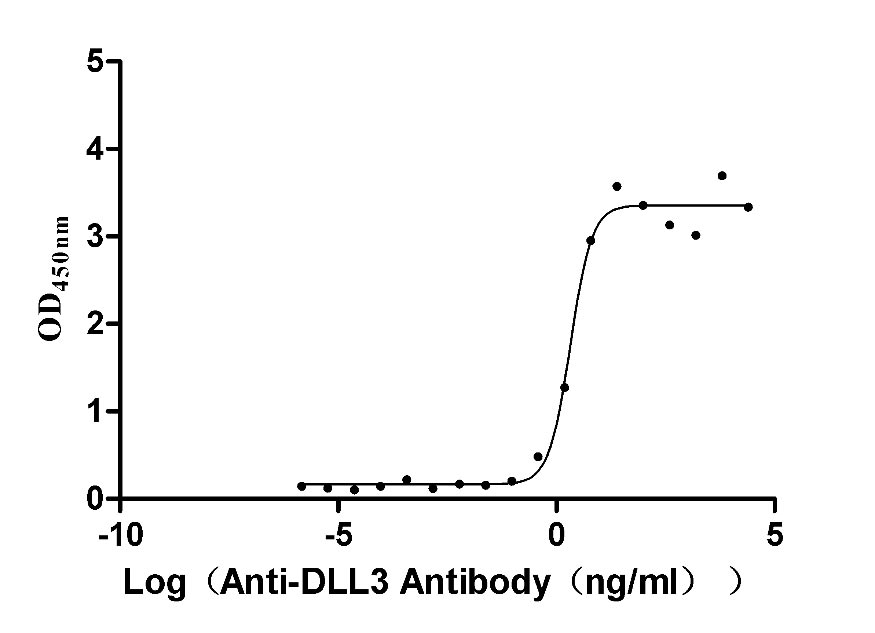
Recombinant Macaca fascicularis Delta-like protein 3 (DLL3), partial (Active)
Express system: Mammalian cell
Species: Macaca fascicularis (Crab-eating macaque) (Cynomolgus monkey)
-
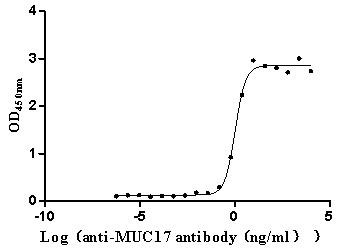
Recombinant Human Mucin-17 (MUC17), partial (Active)
Express system: Mammalian cell
Species: Homo sapiens (Human)
-
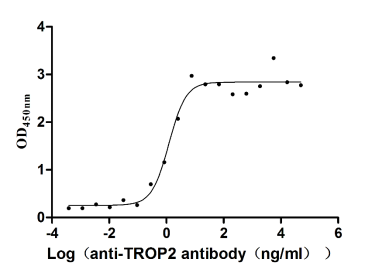
Recombinant Human Tumor-associated calcium signal transducer 2 (TACSTD2), partial (Active)
Express system: Mammalian cell
Species: Homo sapiens (Human)
-
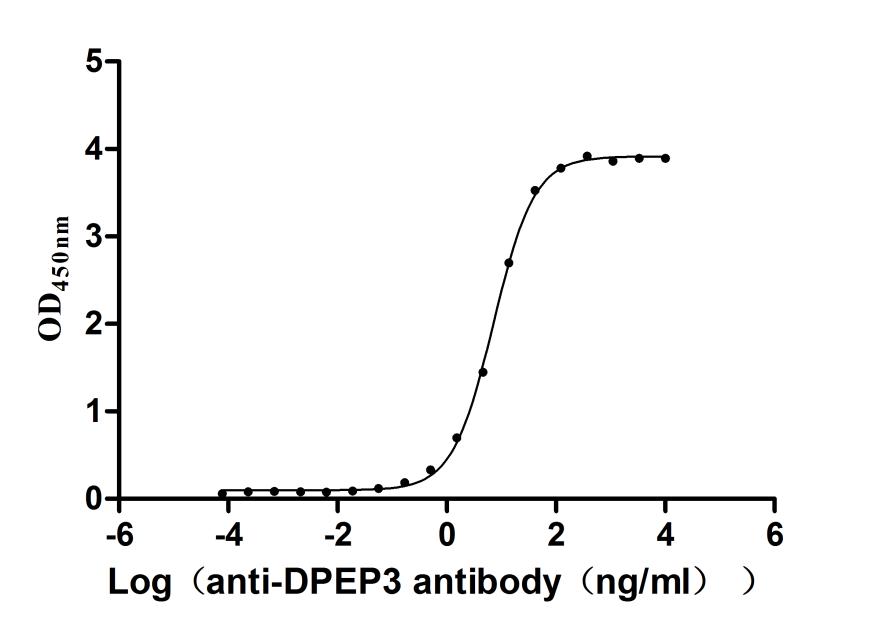
Recombinant Human Dipeptidase 3(DPEP3), partial (Active)
Express system: Mammalian cell
Species: Homo sapiens (Human)
-
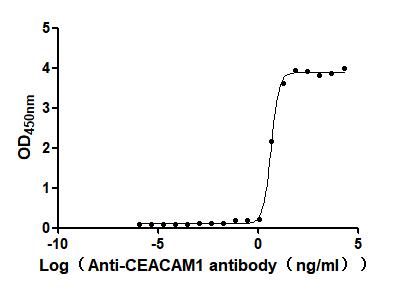
Express system: Mammalian cell
Species: Homo sapiens (Human)