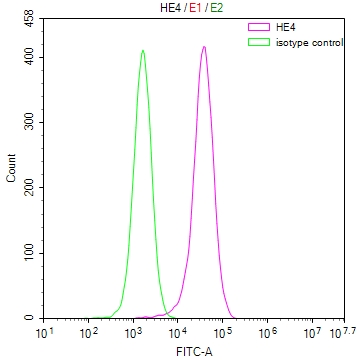
PTPRZ1 Antibody, FITC conjugated
-
中文名稱:PTPRZ1兔多克隆抗體, FITC偶聯
-
貨號:CSB-PA019068YC01HU
-
規格:¥880
-
其他:
產品詳情
-
產品名稱:Rabbit anti-Homo sapiens (Human) PTPRZ1 Polyclonal antibody
-
Uniprot No.:
-
基因名:PTPRZ1
-
別名:3F8 chondroitin sulfate proteoglycan antibody; 3H1 keratan sulfate proteoglycan antibody; HPTPZ antibody; HPTPzeta antibody; Phosphacan antibody; Protein tyrosine phosphatase receptor type Z polypeptide 2 antibody; Protein tyrosine phosphatase, receptor type, Z polypeptide 1 antibody; Protein tyrosine phosphatase, receptor type, zeta polypeptide 1 antibody; Protein-tyrosine phosphatase receptor type Z polypeptide 1 antibody; Protein-tyrosine phosphatase receptor type Z polypeptide 2 antibody; PTP-ZETA antibody; PTP18 antibody; PTPRZ antibody; PTPRZ_HUMAN antibody; Ptprz1 antibody; PTPZ antibody; R PTP zeta 2 antibody; R-PTP-zeta antibody; R-PTP-zeta-2 antibody; Receptor type tyrosine phosphatase beta/zeta antibody; Receptor-type tyrosine-protein phosphatase zeta antibody; RPTP-BETA antibody; RPTPB antibody; RPTPbeta antibody
-
宿主:Rabbit
-
反應種屬:Human
-
免疫原:Recombinant Human Receptor-type tyrosine-protein phosphatase zeta protein (36-300AA)
-
免疫原種屬:Homo sapiens (Human)
-
標記方式:FITC
-
克隆類型:Polyclonal
-
抗體亞型:IgG
-
純化方式:>95%, Protein G purified
-
濃度:It differs from different batches. Please contact us to confirm it.
-
保存緩沖液:Preservative: 0.03% Proclin 300
Constituents: 50% Glycerol, 0.01M PBS, PH 7.4 -
產品提供形式:Liquid
-
儲存條件:Upon receipt, store at -20°C or -80°C. Avoid repeated freeze.
-
貨期:Basically, we can dispatch the products out in 1-3 working days after receiving your orders. Delivery time maybe differs from different purchasing way or location, please kindly consult your local distributors for specific delivery time.
-
用途:For Research Use Only. Not for use in diagnostic or therapeutic procedures.
產品評價

相關產品
靶點詳情
-
功能:Protein tyrosine phosphatase that negatively regulates oligodendrocyte precursor proliferation in the embryonic spinal cord. Required for normal differentiation of the precursor cells into mature, fully myelinating oligodendrocytes. May play a role in protecting oligondendrocytes against apoptosis. May play a role in the establishment of contextual memory, probably via the dephosphorylation of proteins that are part of important signaling cascades.
-
基因功能參考文獻:
- Authors characterized exosomes from GBM cells harbouring and not harbouring PTPRZ1-MET fusion (ZM fusion). PMID: 28504721
- PTPRZ1 is affected in a contiguous gene deletion syndrome PMID: 23570448
- Confirm contribution of PTPRZ1, and especially PTPRQ, in CRC carcinogenesis and demonstrated that PTPRQ expression is correlated with KRAS mutation. PMID: 26851024
- Data indicate that enhanced MET oncoprotein RNA expression by fusion with receptor-type tyrosine-protein phosphatase zeta (PTPRZ1). PMID: 25935522
- Data indicate that the fusion arose from translocation events involving introns 3 or 8 of protein tyrosine phosphatase, receptor-type, Z polypeptide 1 (PTPRZ1) and intron 1 of hepatocyte growth factor receptor MET. PMID: 25135958
- Distinct domains of PTPRZ-B are differentially required for migration and proliferation of glioma cells, respectively. PMID: 25238264
- Protein tyrosine phosphatase zeta enhances proliferation by increasing beta-catenin nuclear expression in VHL-inactive human renal cell carcinoma cells. PMID: 23588815
- Data suggest that CSF-1R-independent actions of IL-34 via receptor-type protein-tyrosine phosphatase zeta (PTP-zeta) might be considered in evaluating IL-34 roles in development and disease. PMID: 23744080
- PTPRZ1 was highly expressed in human neuroendocrine tumor tissues and PTPRZ1 is an oncogenic tyrosine phosphatase in small-cell lung carcinoma. PMID: 23170925
- Receptor-type Protein tyrosine phosphatase beta regulates met phosphorylation and function in head and neck squamous cell carcinoma. PMID: 23226095
- Studies indicate that RPTPzeta is an RPTP for which a link between ligand-dependent dimerization and inhibition of the intracellular tyrosine phosphatase activity has been clearly established. PMID: 22682003
- Enhanced RPTPbeta/zeta signaling can contribute to schizophrenia phenotypes and support both construct and face validity for PTPRZ1-transgenic mice as a model for multiple schizophrenia phenotypes. PMID: 22832403
- Loss of RPTPZ promotes prostate cancer metastasi. PMID: 23060448
- The results of this study suggested that pleiotrophin inhibition of PTPRZ1 contributes to the homeostatic self-renewal of OPCs and that this process is mediated by the tonic activation of beta-catenin/TCF-dependent transcription. PMID: 23100427
- report the cocrystal structure of the carbonic anhydrase-like domain of PTPRZ bound to tandem Ig repeats of CNTN1 and binding assays to show that PTPRZ binds specifically to CNTN1 expressed at the surface of oligodendrocyte precursor cells PMID: 21969550
- molecular basis for the substrate recognition of Ptprz. PMID: 21890632
- RPTP-beta is a key regulator of Met function. PMID: 21454675
- preferential activation of PTPRZ1 by HIF-2 results at least in part from cooperative binding of HIF-2 and ELK1 to nearby sites on the PTPRZ1 promoter region PMID: 20224786
- PTPRZ1 has a role in oligodendrocyte survival and in recovery from demyelinating disease PMID: 12355066
- RPTPzeta has a novel role in regulating glioblastoma cell motility PMID: 14555979
- In AZ-521 cells, which mainly express RPTPbeta, VacA, after binding to RPTPbeta in non-lipid raft microdomains on the cell surface, is localized with RPTPbeta in lipid rafts in a temperature- and VacA concentration-dependent process. PMID: 17030583
- Midkine, pleiotrophin (PTN), and their receptors syndecan-3 and receptor protein tyrosine phosphatase beta/zeta, were highly expressed in the striatum during developmen PMID: 17368428
- the PTN/RPTPbeta/zeta signaling pathway may be constitutively activated and potentially function to constitutively activate ALK in human breast cancer PMID: 17706593
- the effect of the shorter basic peptide P(122-131) on DU145 cells, which express HARP and its receptor RPTPB, suggested interference, under anchorage-independent conditions, of P(122-131) with a HARP autocrine loop in an RPTPB -dependent fashion. PMID: 17727841
- Pleiotrophin receptor (PTPRZ1) is expressed in embryonic stem cells and mediates important signals for survival, proliferation, and maintenance of pluripotency state. PMID: 17823238
- results from the immunohistochemical analyses of rPTPbeta/zeta expression should prompt further evaluation of this protein as a novel oligodendroglioma marker. PMID: 18003890
- PTPRZ1 is unlikely to be related to the development of schizophrenia in the Japanese population PMID: 18186075
- the cleavage sites in the extracellular juxtamembrane region of Ptprz by tumor necrosis factor-alpha converting enzyme and matrix metalloproteinase 9. PMID: 18713734
- GnT-Vb-mediated glycosylation of RPTPbeta promotes galectin-1 binding and RPTPbeta levels of retention on the cell surface. PMID: 18838383
- these data suggest that alpha(v)beta(3) is a key molecule that determines the stimulatory or inhibitory effect of pleiotrophin on cell migration. PMID: 19141530
- phosphacan was present in the evolving astroglial scar after human traumatic spinal cord injury, and, therefore, might play an important role in the blockade of successful CNS regeneration. PMID: 19604403
顯示更多
收起更多
-
亞細胞定位:[Isoform 1]: Cell membrane; Single-pass type I membrane protein. Secreted.; [Isoform 2]: Secreted.
-
蛋白家族:Protein-tyrosine phosphatase family, Receptor class 5 subfamily
-
組織特異性:Specifically expressed in the central nervous system, where it is localized in the Purkinje cell layer of the cerebellum, the dentate gyrus, and the subependymal layer of the anterior horn of the lateral ventricle. Developmentally regulated in the brain.
-
數據庫鏈接:
Most popular with customers
-
-
YWHAB Recombinant Monoclonal Antibody
Applications: ELISA, WB, IHC, IF, FC
Species Reactivity: Human, Mouse, Rat
-
Phospho-YAP1 (S127) Recombinant Monoclonal Antibody
Applications: ELISA, WB, IHC
Species Reactivity: Human
-

-
-
-

-